
Training › For care providers › Safety and mobility
SERVICE PROVIDER · LESSON 2 OF 2
What to Do When You See a Risk
The first lesson trained your eye. This lesson trains your response. Three paths, depending on what you see.
You finished the five-room sweep. You noticed a loose rug at the threshold, a missing grab bar in the bathroom, a chair that is too low for Mr Khalil to push up from. Now what? Not every risk needs the same response. Some you fix on the spot. Some you mention to the family. Some you take to your advocate the same day. This lesson is the decision tree.
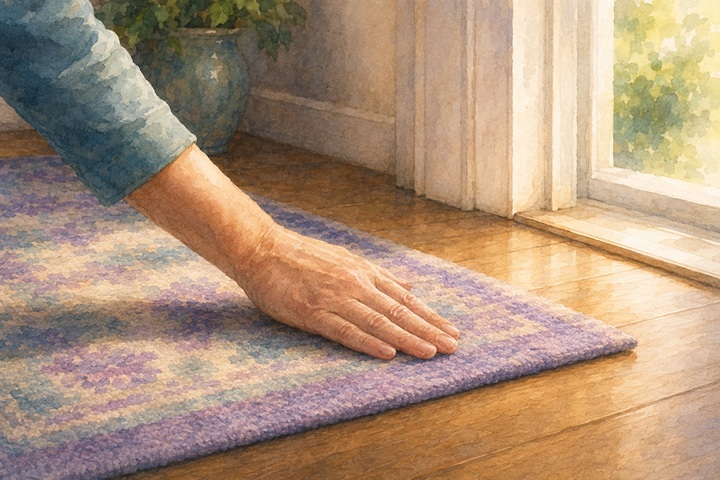
Fix what you can safely fix in two minutes
- Straighten a curled rug. Move a cord behind furniture. Clear shoes from the entry path. Move a footstool out of the walking line.
- Turn on the light in the hallway, the bathroom, the bedroom path the older adult uses at night.
- Place a bath mat with grip on the underside if one is rolled up in the cupboard.
- If a fix would take longer than two minutes, take a tool you do not have, or involve attaching something to a wall, do not do it. Mention it.
The two-minute rule. If you can safely fix it in two minutes with what is already in the home, do it. If it needs anything more (a drill, a contractor, a purchase from the store), name it and move on. You are not a contractor.
Mention everything else to the family
- Send a short, factual note inside the iCaria app to the family member who booked. "The shower has no grab bar. The bath mat has no grip." Two sentences, no opinions.
- Do not call the family from outside the app. The app is the record.
- If the family responds, follow up next visit. If they do not, mention it again on the next visit's note, calmly.
- Do not mention safety risks directly to the older adult unless they ask. The family is the one who can act.
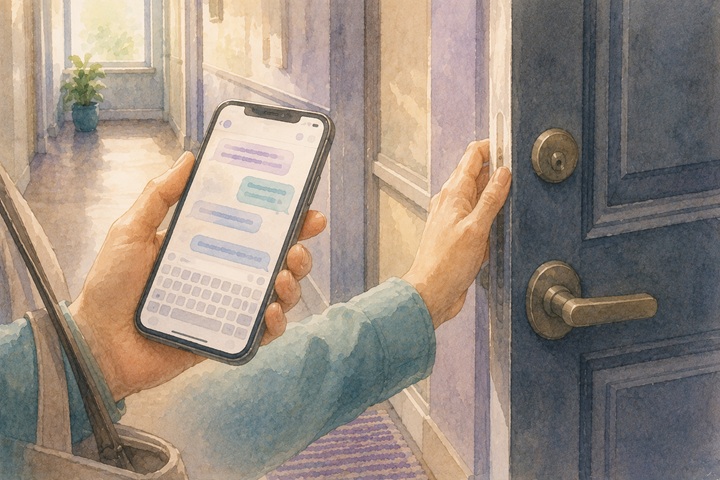
When to escalate to your advocate
You are not the family. You are not the doctor. You are the first set of eyes on the home this week. Some things go past "mention it" and into "tell your advocate today":
- You see signs that Mrs Diallo has fallen recently and did not tell anyone (bruises, a hesitation when she stands, a chair pulled to an odd place).
- You see a safety risk that the family has already been told about and has not addressed across more than two visits.
- You see something that suggests the home is no longer safe at the current level of support.
The path is: a short message to the family from inside the booking, and a message to your iCaria advocate the same day. Your advocate decides whether this needs the safeguarding pathway.
Safeguarding is not optional. If at any point you suspect harm, neglect, or unsafe conditions that put the older adult at immediate risk, the safeguarding pathway is mandatory. You report. iCaria acts. This is covered in detail in the Safeguarding module.
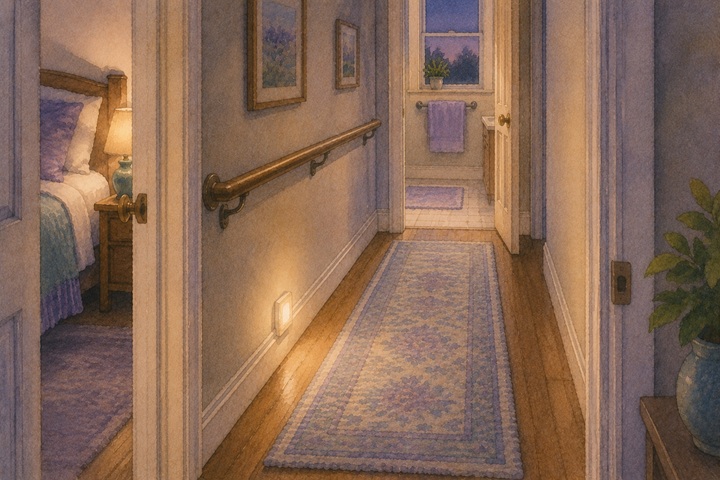
Key takeaways for Lesson 2
- Three paths: fix in two minutes, mention to family, escalate to advocate.
- Fix what you can fix safely in under two minutes with what is in the home.
- Send mentions to the family inside the iCaria app. Not by text. Not by phone call. The app is the record.
- Message your advocate the same day if you see a repeated risk, a sign of an unreported fall, or a home that has outgrown the current level of support.
- Safeguarding is a separate, mandatory path. Follow it when you suspect harm.
Finding this again Open Training from your portal any time to come back to this module. A knowledge quiz follows, and you re-take it each year when you renew your certification.