
Training › For care providers › Safety and mobility
SERVICE PROVIDER · LESSON 1 OF 2
Preparing the Car and the Passenger
The car is part of the home for the minutes the older adult is in it. Treat it that way. Warm the seat. Stow the walker. Help into and out of the seat without lifting unsafely.
Mr Khalil is waiting just inside the lobby of his Scarborough building. He has his walker. It is six degrees outside. You are five minutes early. After this lesson, you can prepare the car so he walks out into a warm seat with his walker stowed and his cane in reach. You can help him into the passenger seat without rushing and close the door gently. The work starts before you ring the bell.
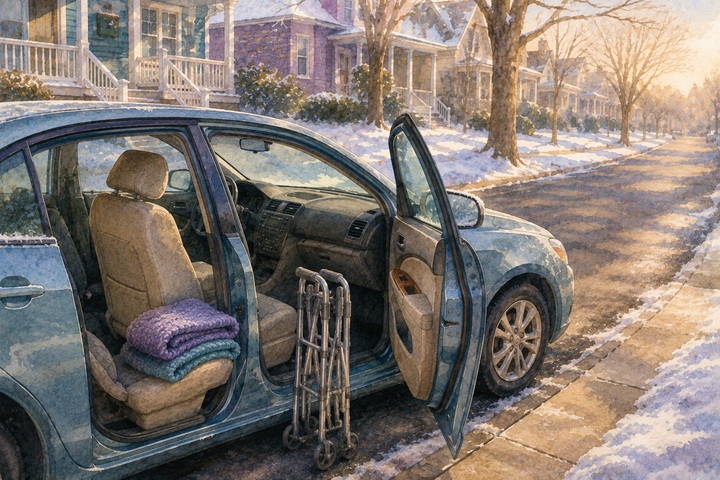
Preparing the car before the door opens
Five minutes early is the right amount of early. Use them.
- Climate. Cabin warm in winter, cool in summer, before the older adult walks out. Most older bodies handle temperature poorly. A warm seat is part of the service.
- Passenger seat position. Angled slightly forward, slightly upright. A reclined seat is harder to get into and harder to get out of.
- Walker stowage. Back seat or trunk, folded, secured so it does not slide in turns. Hand back at the destination, not at the curb of the destination.
- Cane in reach. A cane is not a walker. The older adult will want it during the drive and at the end. Keep it on the floor of the passenger side, not the back seat.
- Belongings. Purse, medication bag, scarves on the passenger floor or in the rear footwell, not in the older adult's lap during the drive. Lap-held belongings shift in turns.
Helping into the passenger seat
The transfer is the moment most older bodies are at risk. Slow it down.
- Hold the door open and step back. Do not crowd. The older adult needs room to position themselves before they sit.
- Turn first, then sit. The right sequence is to face the seat, turn the body to face out, sit, then swing the legs in. Not sit first and twist. Twisting in a seat after sitting strains hips and backs.
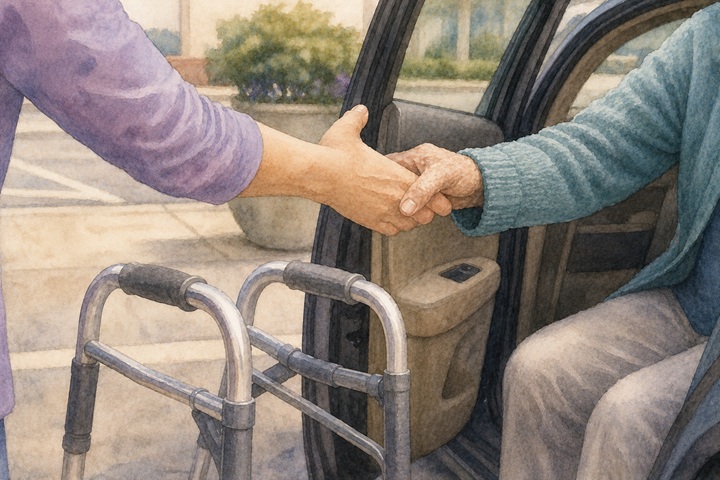
- Hand support, not lift. Offer a forearm to grip if they want it. Never pull. Never lift under the armpits. If the transfer needs more than a forearm of support, the ride needed a different vehicle or a different worker. Stop and call the advocate.
- Watch the head. Older bodies bend forward in a car door more often than they realize. Cue gently: "watch your head as you sit." Do not push the head down with your hand.
- Close the door at half speed. A slammed door is jarring. Pause, check that no scarf or sleeve is in the way, then close gently.
A common moment. Mr Khalil sits down with his right leg still outside the car. You wait. You do not reach in and lift his leg. After a beat, he swings it in himself. That beat is part of the service.
Helping out at the destination
The reverse of the transfer in, with one difference: older bodies are stiffer after sitting still in a car for twenty minutes than they were before getting in.
- Open the door and step back again. Give them room to pivot. Some older adults will want to sit at the edge of the seat for a moment to let the dizziness pass before standing.
- Hand the cane first. Not the walker. The cane is for the few steps from the seat to standing; the walker comes after they are standing.
- Hand the walker, unfolded, ready to use. Do not hand a folded walker and ask them to unfold it standing in a parking lot.
- Belongings last. Purse, scarf, medication bag once they are standing and steady on the walker. Not before.
- Watch for the small step up onto a curb. Most parking lots have one. Older legs do not always lift high enough on the first try. Offer a forearm.
What to skip and why
- Skip lifting. Lifting an older adult is how providers get hurt and how older adults get bruised. If a lift is needed, the ride needs a different vehicle or a different worker.
- Skip the front-of-the-car pickup. Pulling up so the door opens into traffic is a hazard. Park where the passenger door opens to the safer side, even if it means parking further away.
- Skip the "I'll just grab your bag" reach into the back seat with the older adult standing in the parking lot. Get the older adult settled, then the bag.
- Skip multitasking on the phone during the transfer. Phone face down on the dash. Both hands free.
Key takeaways for Lesson 1
- Use the five minutes early to warm the car, position the seat, stow the walker, place the cane in reach.
- The transfer in is turn first then sit, never sit then twist. Hand support, not lift.
- The transfer out is door open, room to pivot, cane first, walker unfolded, belongings last.
- If the transfer needs a lift, the ride needs a different vehicle or worker. Stop and call the advocate.
- Next lesson covers the drive and the door-to-door handoff.
Finding this again Open Training from your portal any time to come back to this module. A knowledge quiz follows, and you re-take it each year when you renew your certification.