
Training › For care providers › Safety and mobility
SERVICE PROVIDER · LESSON 2 OF 2
The SOS Procedure, Step by Step
The first sixty seconds are yours. The next sixty are the team's. This lesson walks through both.
You walk into Karim's bedroom in Scarborough to help him with his morning. He is on the floor by the bed. He looks confused and his right arm is not moving the way it usually does. You have already made the recognition call from Lesson 1: this is an emergency. Now what?
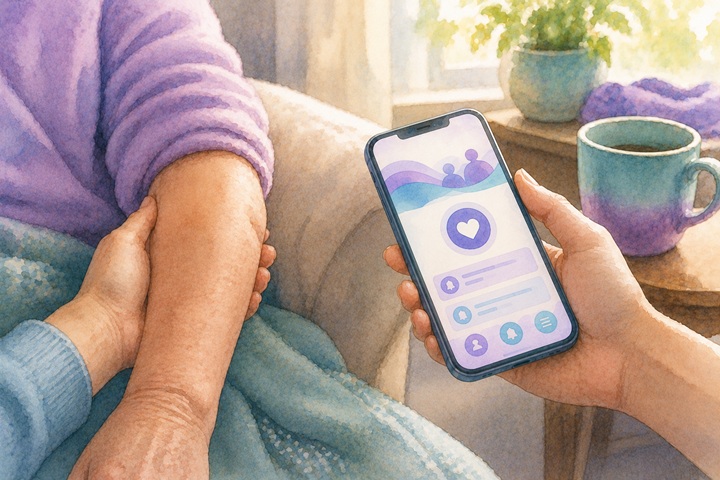
The first sixty seconds
- Stay with the older adult. Do not leave to find a phone. Use the phone in your hand.
- Call 911. Tell them what you see, where you are, and stay on the line. Give the apartment number and the building access code if there is one.
- Tap SOS on the provider app as soon as 911 is on the line. Your phone can do both. SOS does not require talking.
- Do not move the older adult unless the home itself is the danger (fire, smoke, leaking gas, flooding water). A small position adjustment for breathing is fine. Anything more, wait for paramedics.
- Note the time. Glance at the clock. Paramedics will ask. "Around quarter to ten" is enough. Exact is better.
While you wait
- If the older adult is conscious, talk to them. Use their name. "Karim, the paramedics are on their way. I am right here. You are not alone." Calm voice, simple words.
- If they are not conscious, check that they are breathing. If they are not, and you are CPR trained, begin chest compressions and tell the 911 operator. If you are not trained, the operator will guide you.
- If you can safely unlock the front door so paramedics can come in, do it. Then return to the older adult.
- Do not feed, give water, or give any medication while waiting. Some emergencies make eating or drinking dangerous.
- If the family member who booked is in the home, ask them quietly to help by waiting at the door for paramedics or by getting a list of the older adult's medications.
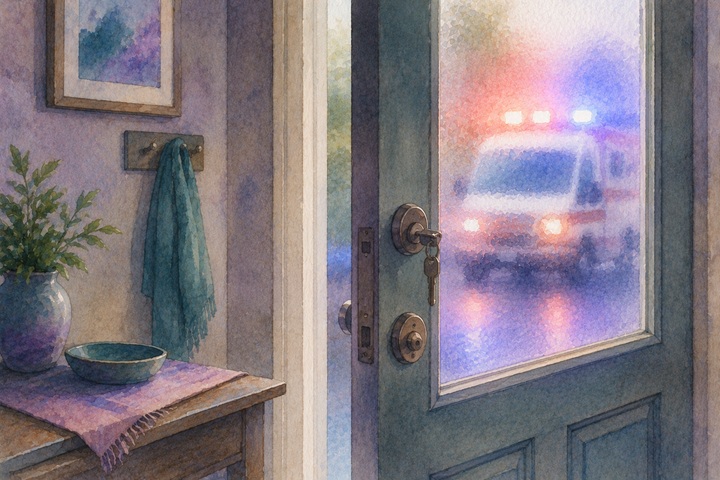
When paramedics arrive
- Tell them, in three sentences: what you saw, when it started, what you did.
- Hand them the older adult's medication list if you found one. Most homes keep it in the kitchen or by the bed.
- Tell them about any allergies you know of from the profile.
- Step back and let them work. They will tell you when they want more information.
- Do not leave the home until either a family member is present or the paramedics have departed with the older adult.
After it ends
Inside thirty minutes of the visit ending, write what happened in the iCaria app. Details fade fast.
- The time you arrived and the time you noticed something was wrong.
- What you saw. Exact words if the older adult said anything.
- What you did, step by step. The 911 call. The SOS tap. The wait.
- Who you spoke to when paramedics arrived. What hospital they were headed to, if known.
- What the family member knew, when, and what you told them.
Your advocate will follow up. Often within the hour. They are the link between the home, the hospital, the family, and iCaria. They will tell you what they need from you next. You do not have to figure it out alone.

Key takeaways for Lesson 2
- Stay with the older adult. Do not leave to find a phone. Use the phone in your hand.
- Call 911 first. Tap SOS on the provider app right after. Both can happen in the first minute.
- Do not move the older adult unless the home is the danger. Do not feed, give water, or give medication.
- Tell paramedics in three sentences: what you saw, when, what you did. Hand them the medication list.
- Inside thirty minutes of the visit ending, write what happened in the iCaria app. Your advocate will follow up.
Finding this again Open Training from your portal any time to come back to this module. A knowledge quiz follows, and you re-take it each year when you renew your certification.