
Training › For care providers › Care fundamentals
SERVICE PROVIDER · LESSON 1 OF 2
Incident or Emergency, and Who You Call
Sylvie tries to stand on her own in Montreal Nord, her hand slips off the walker, and she lands hard on the kitchen floor. She is conscious. She is asking you not to call anyone. The next thirty seconds matter.
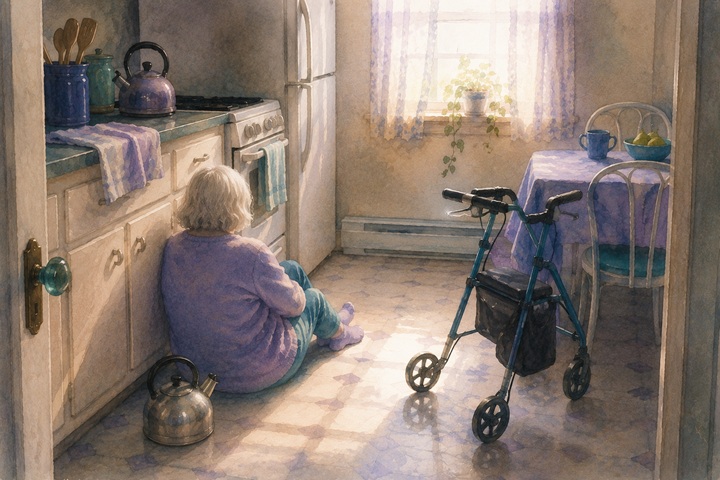
This lesson is about the moment a visit stops being routine. Something has happened. Sylvie has fallen, or Mr Khalil has taken his pills twice by mistake, or a folded envelope of cash is gone from the side table. You have to decide, fast, two things: what kind of event is this, and who do you call first.
Incident or emergency
The first call you make depends on which one you are looking at. They are not the same.
An incident
An incident is something that went wrong but life is not at risk in the next minute. The person is conscious, breathing, and oriented. The harm, if there is any, is something you can describe but not something that needs an ambulance right now.
- A fall where the person is alert and not in severe pain.
- A medication mistake (a missed dose, a double dose) where the person is not symptomatic.
- A missing item, or a sharp argument with a family member during the visit.
- Property damage, a broken cup, a small kitchen fire that you put out.
An emergency
An emergency is when life is at risk in the next minute. The person needs help that is not in your hands.
- Loss of consciousness, even briefly.
- Chest pain, sudden trouble breathing, signs of a stroke (face drooping, slurred speech, one-side weakness).
- A severe fall: head impact, suspected broken bone, severe bleeding, the person cannot be moved.
- An immediate threat to safety, including a fire you cannot put out, or a person in the home in crisis.
If life is at risk, your first call is 911. Not the advocate. Not the iCaria Support. Not the family. Call 911 first. Then start the SOS flow from your provider app so iCaria's safety team is alerted at the same time. Tell the family after the help is already on the way.
Three call paths, one decision
Once you know what kind of event you have, the call path is short. Use the right one the first time and you save the family fifteen minutes of confusion at the worst moment of their week.
Advocate, for care concerns
The advocate is the family's coordinator and your first line of support for anything to do with care. Call your advocate when:
- An incident has happened on your visit and the family needs to be looped in calmly.
- You have a worry about the older adult that the family may not see yet (mood change, weight loss, the home is starting to feel unsafe at the current level of support).
- You and the family disagree about something on the visit and you want a third voice in the room.
iCaria Support, for platform concerns
The iCaria Support is iCaria internal staff. They handle the platform, the payment, the policy. Call the iCaria Support when:
- The app is not letting you tap completed on a booking.
- A payment has not arrived or has arrived in the wrong amount.
- You have a question about a platform rule, a 1099, a tax form, or your provider profile.
Emergency services, for life-threatening events
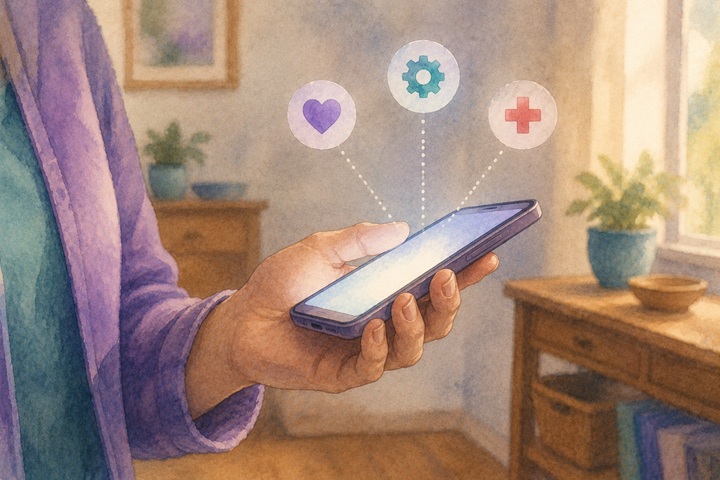
911 in Canada and in the United States. You call them first, before anyone else, when life is at risk in the next minute. The SOS button in your provider app sends a parallel alert to the iCaria safety team. SOS is not a replacement for 911. It is a way to get iCaria on the line at the same time the ambulance is on its way.
Safeguarding has its own path. If what you saw fits safeguarding (signs of harm, neglect, or abuse), follow the Safeguarding module instead of this one. The advocate is still your first call, but the reporting form and the timeline are different. When in doubt, name what you saw to your advocate and let them point you to the right path.
The incident note, written today
An incident is not closed until the note is written. The note is short, plain, and written the same day, before you leave the booking screen in the app. Memory fades faster than you think it will. By Wednesday morning, the bruise on Sylvie's wrist is harder to remember than it was on Tuesday night.
Write the note in the visit notes field on the completed booking. Tag the issue type so the advocate is notified. Three short paragraphs is enough:
- What happened. Sylvie stood from the chair on her own, her right hand slipped off the walker grip, she landed on her right hip on the kitchen linoleum at about 10:45 am. She did not lose consciousness. She was alert and oriented.
- What you did. You stayed with her, checked for severe pain, helped her sit upright against the cabinet. You called her advocate Naima. You stayed for the rest of the booked hour and made tea. You did not call 911 because she was alert, refused, and her vitals looked steady.
- What you flagged. The walker brake on the right side is loose. The kitchen rug at the doorway slips. The advocate should follow up with the family this week.
Three short paragraphs. Plain language. Written the same day. That is the note. The advocate and the iCaria Support both read it. The family sees a summary in their portal. Marcus in the office can pull the note in five seconds if a question comes up next month.

Key takeaways for Lesson 1
- If life is at risk in the next minute, call 911 first. Tap SOS in the provider app so iCaria's safety team is alerted at the same time.
- For care concerns and incidents, call your advocate. For platform, payment, or policy questions, call the iCaria Support.
- An incident is alert, breathing, oriented. An emergency is loss of consciousness, chest pain, stroke signs, severe injury, or an immediate threat.
- Write the incident note the same day, in the visit notes field, before you leave the booking screen. Three short paragraphs: what happened, what you did, what you flagged.
- If what you saw fits safeguarding, follow the Safeguarding module path, not this one.
Finding this again Open Training from your portal any time to come back to this module. A knowledge quiz follows, and you re-take it each year when you renew your certification.