
Training › For care providers › Care fundamentals
SERVICE PROVIDER + ADVOCATE · SHARED
Cultural Humility and Multilingual Service
How to serve a family across Arabic, English, French, and Spanish in a way that fits how they actually live at home. The home is the starting point, not the training manual.
After this module, you can walk into Maria's apartment in East Houston, or Karim's in Scarborough, or Sylvie's in Montreal Nord, and serve the family in a way that respects how they actually live. You can greet in the language they speak at home. You can take cues from the shoes by the door, the food in the kitchen, the photos on the wall. You can ask before you assume. You can recognize when something you were taught as standard care does not fit this family, and adjust without making a big deal of it.
Why this matters
Every family lives a slightly different way. The food, the language, the religion, the holidays, who decides what, who answers the door. Standard care assumes a single home; the homes you visit are not single. iCaria serves families across four languages and many different ways of living, and your job is to fit the home, not redirect it.
Cultural humility is not a checklist. It is a habit of noticing, asking, and adjusting. It also lets the older adult and the family feel seen in their own home, which is the foundation of every other piece of care you provide.
The first minute at the door
Before you knock, check the profile. The family has told iCaria what language they speak at home. They have told you the name the older adult prefers. Use both.
- If the profile says the family speaks Arabic at home, greet in Arabic, even if you only know two words. "As-salaam alaikum" goes a long way.
- If the profile says Spanish, "Buenos días" lands warmer than "Good morning".
- Use the older adult's preferred name from the first greeting. Not "ma'am". Not "sir". Their name.
- If you mispronounce a name, ask how to say it. The person will tell you, kindly. Then use it.
Reading the home
What you see in the first thirty seconds tells you most of what you need. You do not have to ask about every detail. The home will tell you what matters to the family.
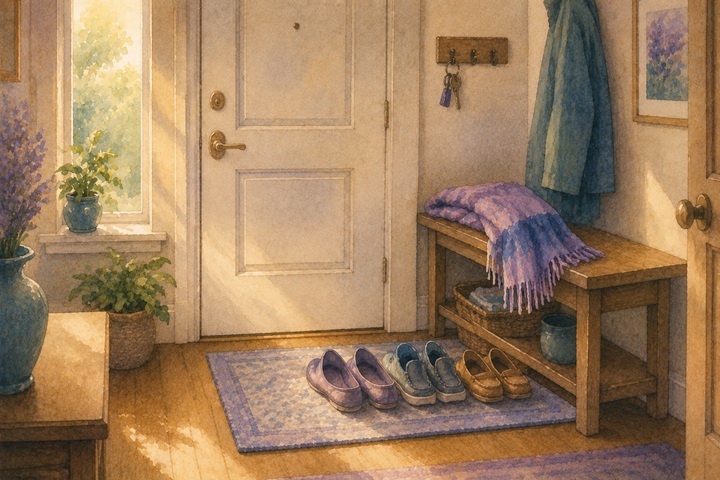
- Shoes by the door. Many families remove shoes inside. If you see shoes lined up at the threshold, leave yours there too. No comment, no big production, just do it.
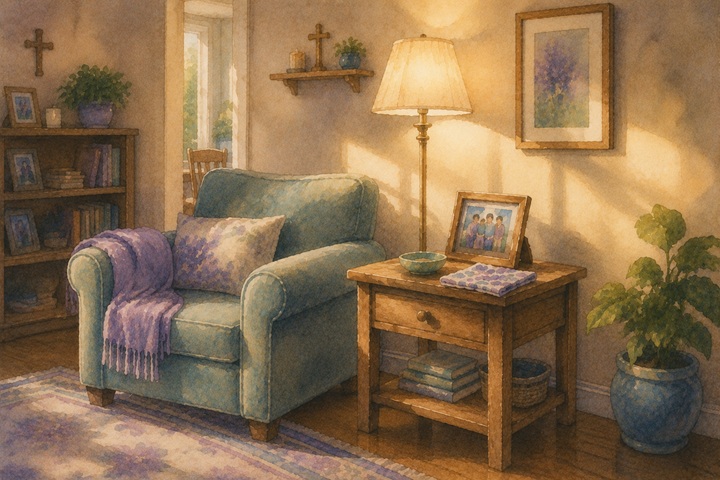
- A prayer rug folded on a bench, a small altar, a religious item on a shelf. Notice and move around it. Do not handle it. Do not ask about it unless the family brings it up.
- Photos on the wall, on the mantle, on the fridge. They tell you who matters. You do not need to ask about each one.
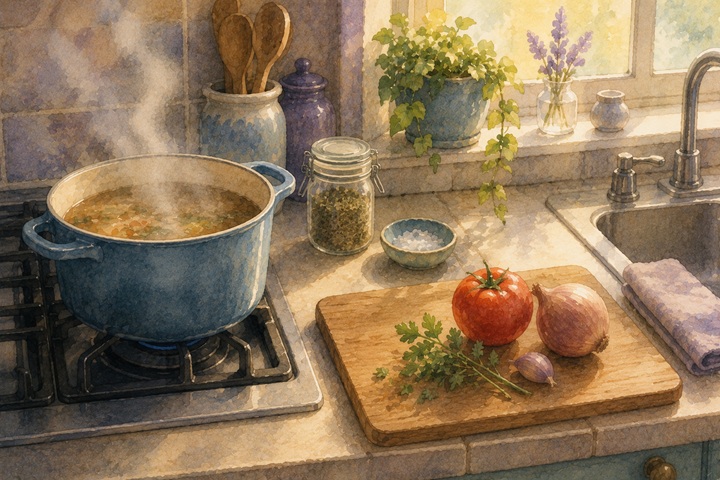
- The food in the kitchen. If you are helping with meals, look at what is already there. Do not bring foods from outside the family's pattern without asking.
- Bare arms, head coverings, the way people dress in their own home. Follow the family's lead. If the women in the household cover their hair, do not ask them to remove it for any reason.
An example. You arrive at Maria's apartment in East Houston. The shoes are by the door. There is a small statue of the Virgin on the side table with a candle. The kitchen smells like beans on the stove. Without saying anything, you slip your shoes off, give the side table a respectful pass, and go to wash your hands before you ask Maria what she would like for lunch.
Asking before assuming
When in doubt, ask. The question is always small and short. It is not an interview.
- "Should I take my shoes off?" if you cannot tell from the door.
- "Is there a time today I should not be here?" before you set your visit time, in case the family observes prayer at a particular hour.
- "What do you usually have for lunch?" before you cook. Cook what they cook.
- "How would you like me to address you?" if the profile is silent or the family member calls the older adult by something different.
- "Is there anything I should know about today?" at the start of every visit. This is a small open door, and the family will tell you what matters.
Adjusting standard care habits
You have been trained on a default way of doing things: greet with a handshake, dress in a certain way, mealtime at a certain hour, certain words for certain conditions. None of that is wrong. None of it is universal either.
- Handshake. Some older adults, especially across genders, may not shake hands. A small bow, a hand on the heart, a friendly nod all land warmly. Follow the older adult's lead in the first three seconds.
- How you dress. A neat, modest visit outfit travels well across every family. If you are working with a family that observes modesty in dress, lean into the modest end of your wardrobe.
- Mealtime. Families eat at different hours. If the family lunches at two, do not push for noon. Cook with what is in the kitchen, on the family's schedule.
- Prayer or quiet time. If the family observes prayer at a particular hour, build your tasks around it. Do not vacuum during prayer. Do not ask questions during it.
- Touch. Ask before you touch. Always. Especially with an older adult of a different gender than yourself.
When language is hard
You will sometimes work with a family whose home language you do not speak fluently. That is fine. iCaria matches as best it can, but matching is not always perfect.
- Learn the basic greetings, the words for "yes", "no", "please", "thank you", and one or two food words in the family's home language. Use them.
- Speak your shared language slowly and use plain words. Avoid idioms.
- If the older adult prefers their home language, ask the family member who books you if a phone translator app would help. Many families use them already.
- Write important things down. Numbers, times, names of medications you can see in plain view. Pictures and gestures fill the rest.
When a cultural difference becomes a care decision
Most cultural differences are not care decisions. They are the way the family lives. You fit in and the visit goes well.
Sometimes a cultural pattern crosses into a care decision. A diet so restricted you are worried the older adult is not eating enough. A family member asking you to do something the older adult clearly does not want. A religious observance that is going to clash with a medical appointment the family has booked. These are not yours to resolve at the kitchen table.
- Finish the visit kindly. Do not argue in the home.
- Send a same-day message to your iCaria advocate. The advocate speaks the family's language at home and knows the family across years. They are the right person to work through it.
- Document what you saw in factual terms in the app. Not your opinion. What you saw, what was said.
Your advocate is the bridge. The advocate is a real local person who lives in the community, speaks the family's language at home, knows the local providers, and stays with the family across years. When a cultural pattern crosses into care, the advocate is the person who can have the longer conversation that the visit cannot hold.
Key takeaways
- Check the profile before you knock. Greet in the family's home language, even if you only know two words.
- Read the shoes, the food, the religious items, the photos. Follow the cues without commenting on them.
- Ask before assuming about touch, food, prayer time, and holidays. The questions are short.
- Adjust standard habits (handshake, dress, mealtime) to fit the family's pattern. The home is the starting point.
- When a cultural pattern crosses into a care decision, finish the visit kindly and message your advocate the same day.
Finding this again Open Training from your portal any time to come back to this module. A knowledge quiz follows. Advocates pass it once before activating a caseload, and everyone re-takes it each year when they renew their certification.