
Training › For families › Staying safe at home
FAMILY · LESSON 1 OF 2
Fall Prevention at Home: Living Areas and Bedrooms
Most falls at home come from small, ordinary things. A rug that slides. A cord across the floor. A lamp too far from the bed. This first lesson walks the rooms where your parent spends the most time, and names the quick fixes you can make this week.
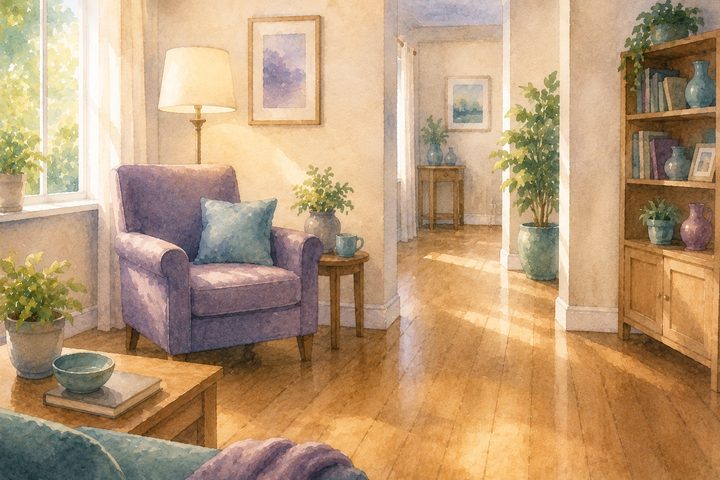
This lesson is for you, the daughter or son or niece or nephew who wants your parent's home to stay a place where they feel safe and free. You do not need to be a builder. You do not need to spend much. Most of what causes a fall at home is small and easy to change once you have walked the rooms with fresh eyes. That is what this lesson helps you do.
Pick a calm afternoon when your parent is rested and not rushing. Walk each room slowly. Imagine the path your mum or dad takes from the bed to the bathroom at night, from the armchair to the front door, from the kitchen to the table. Look at the floor first, then the light, then the furniture. Make a short list as you go. You will not fix everything today, and you do not have to.
Do this with your parent, not to them. This is their home. Walk the rooms together and ask what feels harder than it used to. A rug they love may stay if they want it to, with a non-slip pad underneath. The goal is to keep the home theirs and make it safer at the same time, never to strip it bare.
The living room and the path through it
Start where your parent sits the most. The living room is full of small risks that hide in plain sight because everyone steps around them without thinking.
Loose rugs and mats
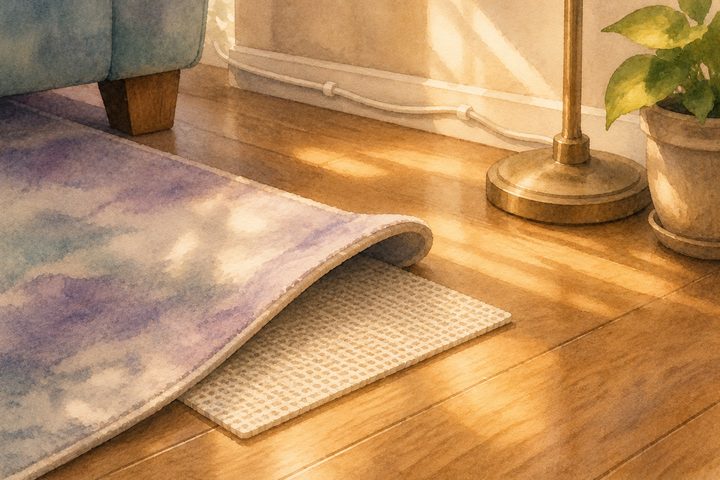
A rug that slides or has a curled edge is the most common trip hazard in the home. The fix is cheap. Add a non-slip pad underneath, use double-sided carpet tape along the edges, or roll the rug up and store it for now. A loose runner in a hallway is the same story. If the corner curls, it catches a slipper.
Cords and clutter on the floor
Look for lamp cords, phone chargers, and television wires that cross a walking path. Run them along the wall, tuck them behind furniture, or use a cord cover. Then clear the floor itself. A stack of magazines, a footstool left in the open, a pet bowl in the doorway. The path from the door to the chair should be wide and empty.
Chairs and sofas that sit too low
Watch your parent stand up from their favourite chair. If they have to rock forward two or three times, or push hard on the arms, the seat is too low or too soft. A firm cushion can raise the seat. A chair with sturdy armrests gives them something solid to push against. The same goes for the sofa they read on.
Light you can reach
Many living-room falls happen in the dim part of the day, late afternoon and evening, when the light fades but no one has turned a lamp on yet. Put a lamp within arm's reach of the chair so your parent never crosses a dark room to reach a switch. A few well-placed lamps beat one bright ceiling light that leaves shadows in the corners.
The bedroom and the night-time path
The trip from the bed to the bathroom in the dark is one of the riskiest journeys in the whole home. Half asleep, low light, often in a hurry. This is where a few small changes do the most good.
Night lights along the route
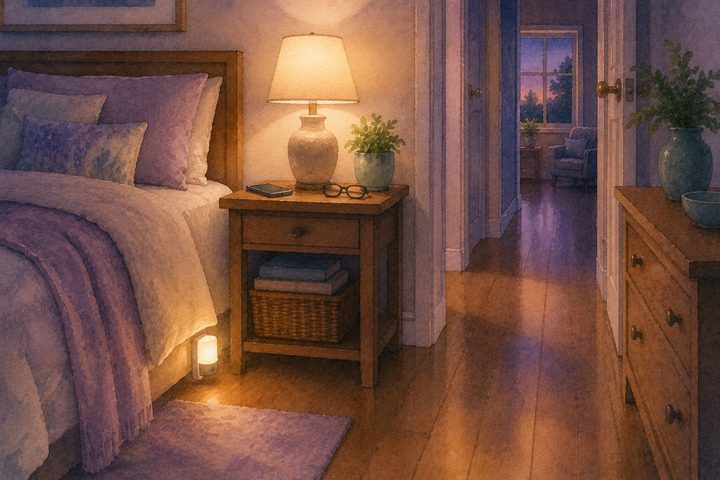
Put a soft night light by the bed and another in the hallway, so the path to the bathroom is lit the whole way. The kind that switches on by itself when the room goes dark is best, because no one has to remember it. This is one of the cheapest and most useful fixes in this entire module.
The bed and the bedside table
The bed should be a height where your parent's feet rest flat on the floor when they sit on the edge, not so high they slide down and not so low they struggle up. Keep a lamp, the phone, and their glasses on the bedside table within easy reach, so they are never tempted to get up in the dark for something they could have kept close.
Clear the route, watch the slippers
Walk the path from the bed to the door. Move anything in the way: a low chest, a basket, a charging cable. Then look at what your parent wears on their feet at night. Loose slippers and long nightgowns catch on the floor and on the stairs. Well-fitting slippers with a grip sole, or simple non-slip socks, are safer than bare feet or floppy slippers.
A note on what is yours and what is the doctor's. Tidying a room, adding a light, and moving a rug are all yours to do. But if your parent feels dizzy when they stand, if their eyesight has changed, or if a new medication leaves them unsteady, that is a health question. Write it down and raise it with their doctor or a physiotherapist. A safer room helps, but it cannot fix a balance or medication problem on its own.
Make your short list
By now you have walked the living room and the bedrooms and noticed a handful of things. Most of them you can fix yourself in an afternoon: a non-slip pad, a night light, a cord tucked away, a firmer cushion. A few may be bigger, like rearranging heavy furniture or sorting a chair that is simply wrong for your parent. Those go on a short list to bring to your advocate.
If you are a Basic or Pro family with an assigned advocate, you can message them about what you found. The advocate owns your parent's care plan and can note a recurring need, and they can help you set up a home-help booking when there is heavier work a provider should do. The next lesson covers the bathroom, the stairs, and the entryway, the three places where most home falls actually happen.
Key takeaways for Lesson 1
- Walk the living room and bedrooms on a calm afternoon, with your parent, looking at the floor first, then the light, then the furniture.
- Loose rugs and floor cords are the most common trip hazards. A non-slip pad, carpet tape, or a cord cover fixes most of them for very little money.
- A chair or bed at the right height, with something solid to push against, makes standing up safer than any single big change.
- Light the night-time path from the bed to the bathroom with automatic night lights. It is one of the cheapest and most useful fixes there is.
- Dizziness, eyesight changes, and new medications are health questions for the doctor or physiotherapist, not room fixes. Write them down and raise them.
Finding this again Open Training from your family portal any time to come back to this module. It has two short lessons. When you have finished this one, continue to Lesson 2 for the bathroom, the stairs, and the entryway. The module is optional and educational.