
Training › For families › Medication and nutrition
FAMILY · LESSON 1 OF 1
Practical Nutrition and Hydration for Older Adults at Home
Eating and drinking well at home is built from small, steady habits, not rules. This module is about the habits that help, the quiet signs that something has changed, and who on the care team to tell.

This is for you, the daughter or son or niece or nephew who notices the small things between visits. The same plate left on the counter all day. A favourite snack that has stopped disappearing from the cupboard. A full glass of water still full at bedtime. None of these is an emergency. All of them are worth paying attention to, and most of them respond to a few small habits you can help set up.
One thing first, and it runs through this whole module. This is general guidance for daily life at home. It is not medical advice. Anything specific about your parent's body, their weight, a special diet, a swallowing worry, a medication that affects appetite, goes to their doctor, a dietitian, or a pharmacist. And your iCaria advocate is always a good first call when you are not sure who to ask.
Small habits that make a real difference
The goal is not a perfect diet. The goal is a few easy habits that fit into the day your parent already has. Habits beat rules because your parent can keep them without thinking about it.
Make eating a rhythm, not a decision
For many older adults, the hardest part of eating is deciding to. A set rhythm removes the deciding. Breakfast at the same time. A warm lunch around midday. Something light in the evening. The clock does the prompting, so your dad does not have to.
If your parent lives alone, eating can also feel like a chore worth skipping. A standing phone call at lunchtime, a neighbour who drops in, a grandchild on a video call while the kettle boils. Company turns a skipped meal into a shared one.
Keep water in sight
Thirst gets quieter with age. Your parent may simply not feel like drinking, even when their body could use it. The fix is gentle and visual. A jug and a glass left on the table where they sit. A small drink with every medication. A cup of tea mid-afternoon out of habit. Water you can see is water that gets drunk.
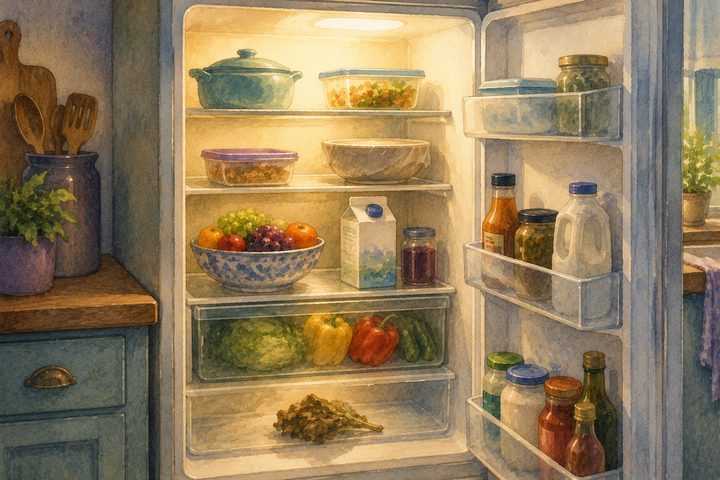
Make the easy choice the visible one. A bowl of cut fruit in the front of the fridge. A glass of water by the armchair. The kettle and the mugs on the counter, not in a high cupboard. You are not nagging. You are arranging the kitchen so the good choice is the one right in front of your mum.
Right-size the food and the packaging
A large portion can feel like too much and put a person off the whole meal. Smaller plates, more often, often work better than three big meals. And watch the packaging. A jar your mum cannot open, a wrapper that needs strong fingers, a heavy carton, these quietly become reasons not to eat. Loosening lids before you leave, or moving favourites into easy containers, removes a barrier she may never mention.
The everyday risks worth watching for
You do not need to be a nurse to notice these. You need to know what to look for and trust yourself when you see it.
Skipped meals and shrinking appetite
The clearest sign is food that does not move. Groceries you bought last week still sealed. The same leftovers in the fridge three days running. A plate scraped into the bin untouched. One skipped lunch is nothing. A pattern of them is worth a note to the care team.
Low thirst and the quiet signs of it
A glass that stays full all day tells you something. So can a change you can see in your parent, more tired than usual, foggy or confused in a way that is new, a dry mouth, a headache they mention in passing. You are not diagnosing anything. You are noticing a change, which is exactly your job here.
Food safety in the kitchen
As taste and smell fade, it gets harder for your parent to tell when food has turned. Open the fridge when you visit. Check dates on the milk and the leftovers. Clear out anything past its time. A quiet once-over of the kitchen is one of the most useful things you can do on a visit, and your parent rarely minds.
This module names signs, not numbers. How much your parent should eat or drink, whether they need a special diet, any swallowing or weight concern, these are medical questions with answers that depend on your parent specifically. We will not put a number on this page, because the right number comes from their doctor, a dietitian, or a pharmacist who knows their history.
Who to tell when something changes
Noticing is half the job. The other half is telling the right person. Different changes go to different people.
| What you are seeing | Who to tell first |
|---|---|
| A medical worry: real weight change, trouble swallowing, a new confusion, appetite gone for days | Your parent's doctor. This is theirs, not iCaria's. |
| Questions about a special diet, food and a health condition, or appetite-related medication side effects | A dietitian or a pharmacist, often through the doctor. |
| A pattern at home you want a second set of eyes on, or help arranging meals and support | Your iCaria advocate. |
When in doubt, your advocate is a safe first call. They know your family, they know what is already in place, and they can point you to the right professional. They will not give medical advice, and they will tell you plainly when a question belongs with the doctor.
How iCaria can help with eating and drinking
You are not doing this alone, and a few tools you already have can carry some of the weight.
The care plan holds the dietary picture
Your advocate writes and keeps your parent's care plan. It has space for dietary notes and a meal plan, the things that matter for your parent specifically: what they like, what they avoid, the cultural and religious foods that make a meal feel like home. If something about eating changes, ask your advocate to update that part of the plan so everyone who visits is working from the same page. The care plan is for goals and routines, not for clinical instructions or managing medications.
Meal packages bring food to the door
When cooking is the barrier, iCaria meal packages are home-cooked meals delivered to your parent's home by an iCaria driver. Each one shows what is included, the dietary profile, and any allergens, so you can choose with confidence.
Allergens come from your parent's profile. If a meal contains something your mum is allergic to, you will see a warning before you confirm the order, and you have to acknowledge it on purpose. Keep the allergy list on your parent's profile accurate. That list is what makes the warning work.
Tasks for the small things around food
A task is an ad-hoc bit of help, separate from a scheduled visit. A grocery run, putting the shopping away into easy-to-reach places, loosening the jar lids, a quick tidy of the fridge. These are exactly the small jobs that keep good eating easy at home, and you can arrange them without waiting for the next booking.

Key takeaways
- Build a rhythm, not a rule. Same meal times, water left in sight, smaller portions more often, packaging your parent can actually open.
- Watch for food that does not move, a glass that stays full, and food gone off in the fridge. One off day is nothing. A pattern is worth a note.
- This module names signs, never numbers. Any specific amount, diet, or worry belongs with the doctor, a dietitian, or a pharmacist.
- Tell the right person: the doctor for medical worries, a dietitian or pharmacist for diet and medication questions, your advocate for everything else.
- Use the tools you have. Keep the dietary part of the care plan current, order meal packages with the allergen warning on, and arrange tasks for the small food jobs.
Finding this again Open Training from your family portal any time to come back to this module. It is optional and educational. There is a short self-check at the end if you want it, with no score that gates anything and no certificate.